DiscoveryX 2026 was one of the most useful and energizing events I’ve attended. I joined both days from morning to evening, yet the event never felt slow or repetitive.
DiscoveryX 2026 was honestly one of the most useful and energizing events I’ve been to.
I was there for both days, fully in it from morning to evening. The first day I stayed from 8 AM to 7 PM, and the second day from 8 AM to 4 PM. Even with those long hours, it still felt like there was more to see, more people to meet, and more conversations I wanted to continue the next day. That was one of the first things I noticed about DiscoveryX: there were so many opportunities, but also enough time and space to actually use the day properly instead of feeling rushed through everything.
Even before entering, the experience started smoothly. Parking was accessible, easy, and not overly expensive, which matters more than people think when you’re attending a full-day event and trying to stay focused. Then I walked through this huge hall into the conference space, and right away it felt like I had stepped into something much bigger than a typical networking event. It had energy.
One thing I really liked was the badge/tag system. We were given cards with tags, and instead of worrying about collecting business cards or losing track of people, you could connect through the Discovery app. Their email, company name, and contact details would be saved there, which made networking so much easier and more practical. Honestly, that alone solved a problem that happens at almost every event, where you meet great people and later can’t find half of them.
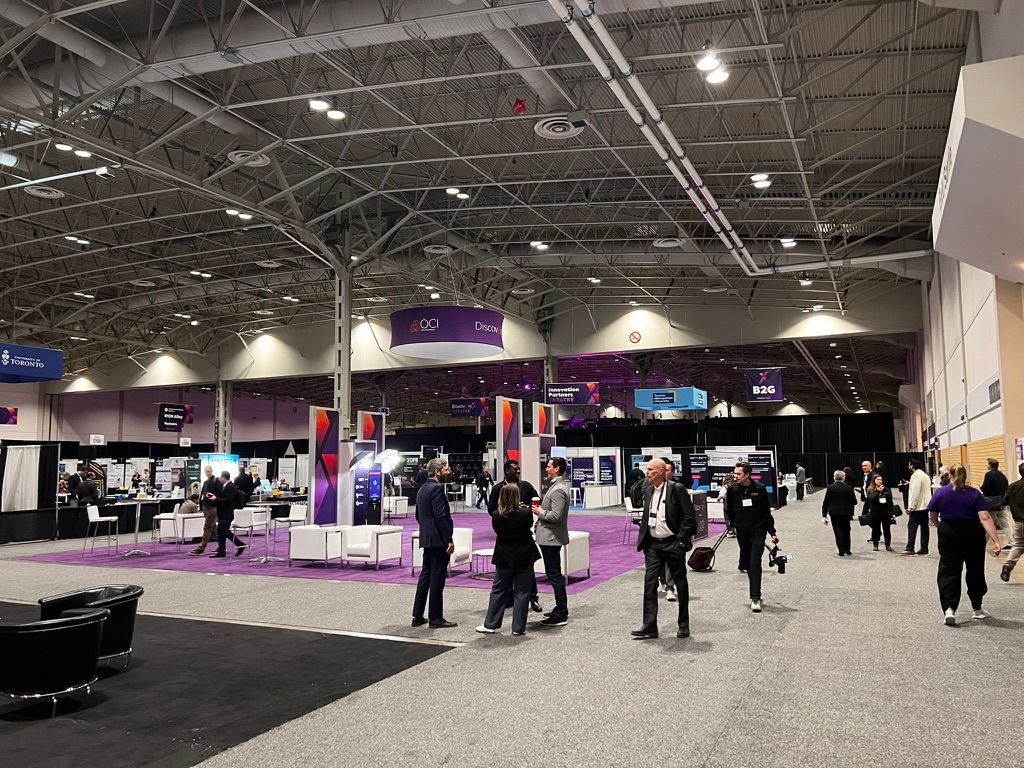
From there, I started walking the floor and talking to companies across so many different spaces. That was one of the most exciting parts for me. There were companies working in defence, AI, advanced technologies that felt like “GPT but closer to the human mind,” devices enhanced through Wi-Fi-based sensing, robotics, health innovation, and companies building technology to support children in need using robots. I also came across people working on robotics in education and school programs, which I found really interesting because it showed how broad innovation at DiscoveryX really was. It wasn’t one narrow industry event. It felt like a real meeting point between ideas, technology, research, business, and real-world use.
What stood out even more than the technology was the people behind it. I talked to founders and entrepreneurs who were genuinely excited to share what they were building. The atmosphere was supportive and positive. Most people weren’t guarded in a strange way. They were open, curious, and willing to ask what brought you there too. That made the event feel human, not just transactional. You could hear people talking passionately about their products, their innovations, their challenges, and what they were trying to solve.
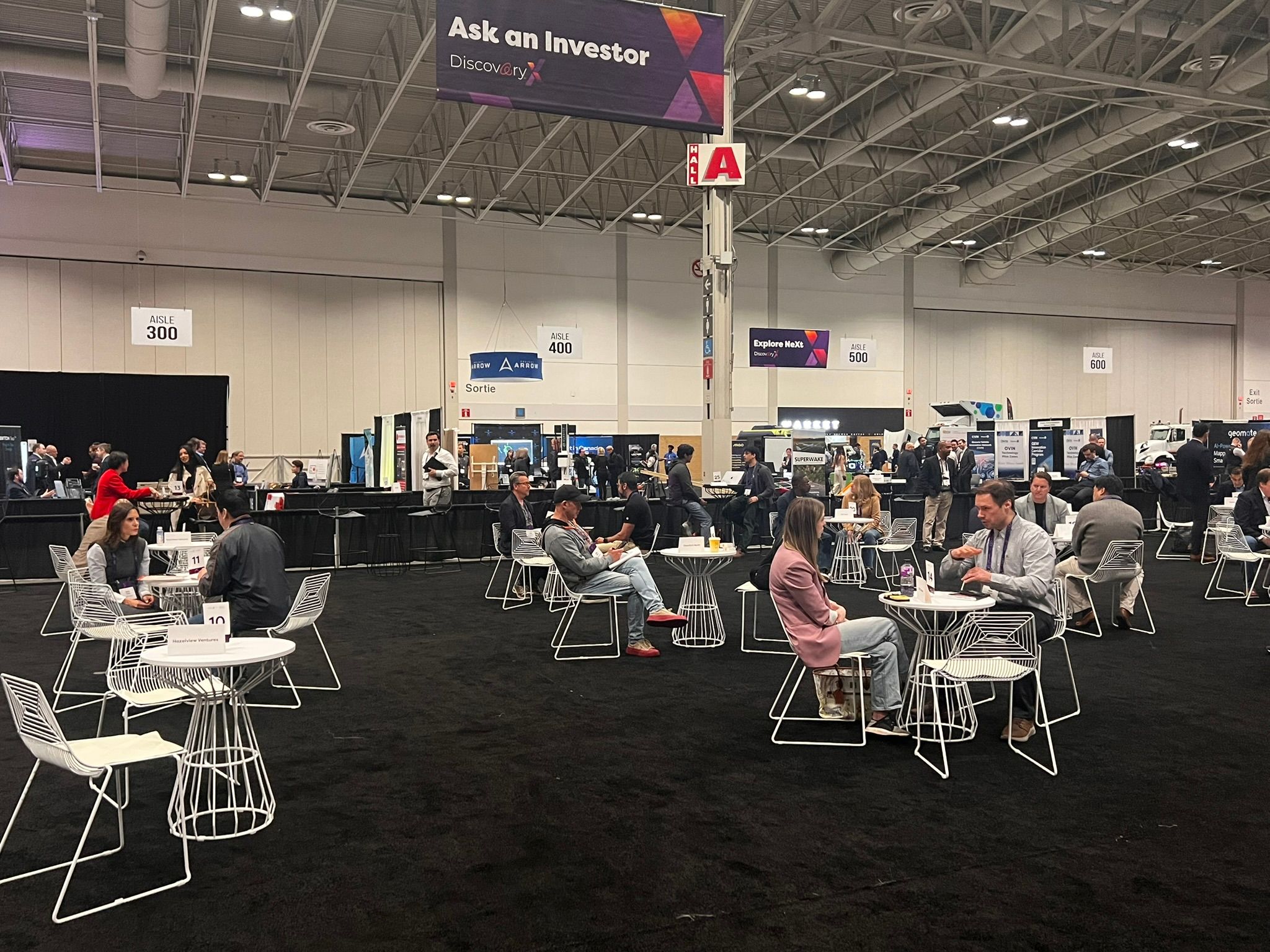
One of the best parts for me was the chance to speak with investors through short 10-minute sessions. And what made it even better was that it wasn’t a one-time opportunity. There were multiple chances to sit down, pitch your product, ask questions, get feedback, and understand what matters from an investor’s point of view. That was incredibly valuable. Sometimes as a founder, you need direct exposure to how investors think, what they pay attention to, what makes them interested, and what makes them hesitate. Those sessions gave me exactly that. I took notes, made connections, and some of those conversations even opened the door for follow-up meetings afterward, including online meetings.
I used the opportunity to speak about Winelts, and it became one of the most meaningful parts of the event for me. I had conversations with many people who had either struggled in the past to achieve the IELTS score they needed or were still actively facing that challenge. When I explained that the app begins with a screening process, identifies each user’s weak points, and then provides targeted practice questions in the exact areas where they need the most improvement, people immediately understood its value. Many of them told me they would definitely try the app, and some even installed it while I was explaining the idea and purpose behind it. That moment genuinely made me happy, because the core mission of Winelts is to support people who feel blocked by their IELTS score and give them a smarter, more personalized way to improve. I truly believe this app can help users break through those score barriers and move closer to the opportunities they are working so hard to reach.
However, one important point I feel I must acknowledge is that parts of Canada’s investor and technology communities still seem somewhat disconnected from the real challenges immigrants face. Many immigrants are dealing with barriers that are not always visible from the outside, including language requirements, professional licensing, career rebuilding, financial pressure, and the emotional weight of starting over in a new country. I believe this is exactly where meaningful investment opportunities exist. Canada has been built through diversity, immigration, and the combined contributions of both newcomers and established communities. These realities cannot be separated or ignored. When investors understand the daily struggles of immigrants, they can identify solutions that are not only commercially valuable but also socially meaningful. Winelts is one example of that kind of solution: a product designed around a real problem, for a real community, with the potential to create both impact and growth.
I also had the opportunity to connect with SheBoot, which was meaningful to me because of the support they offer to women founders. As a woman building and growing, it matters to meet people and communities that actually understand the journey and want to support it in a real way.
Another moment that really stayed with me was meeting a woman founder, who spent around an hour with me and shared such rich experience. That kind of generosity is rare. It wasn’t surface-level advice. It was thoughtful, honest, experienced insight, and I truly appreciated that time. Those kinds of conversations are part of what made DiscoveryX so special for me. It wasn’t just about booths and branding. It was also about real people giving real help.
I’ve listened to the Founder of Palusa Investments, and I found his perspective especially valuable. He spoke about supporting early-stage founders and gave practical insight into what matters when you’re building from the ground up. Hearing that directly, in that environment, added another layer to the experience because it reminded me that innovation is not only about having an idea. It’s also about learning how to position it, how to grow it, and how to build with the right support around you.
One of the most memorable small moments for me was speaking with an investor who was French but could speak Persian (my native tongue). As someone who values connection deeply, that made the conversation feel even more personal and comfortable. These are the kinds of interactions that stay with you, because they remind you that business events are not only about strategy. They’re also about human connection, trust, and shared understanding.
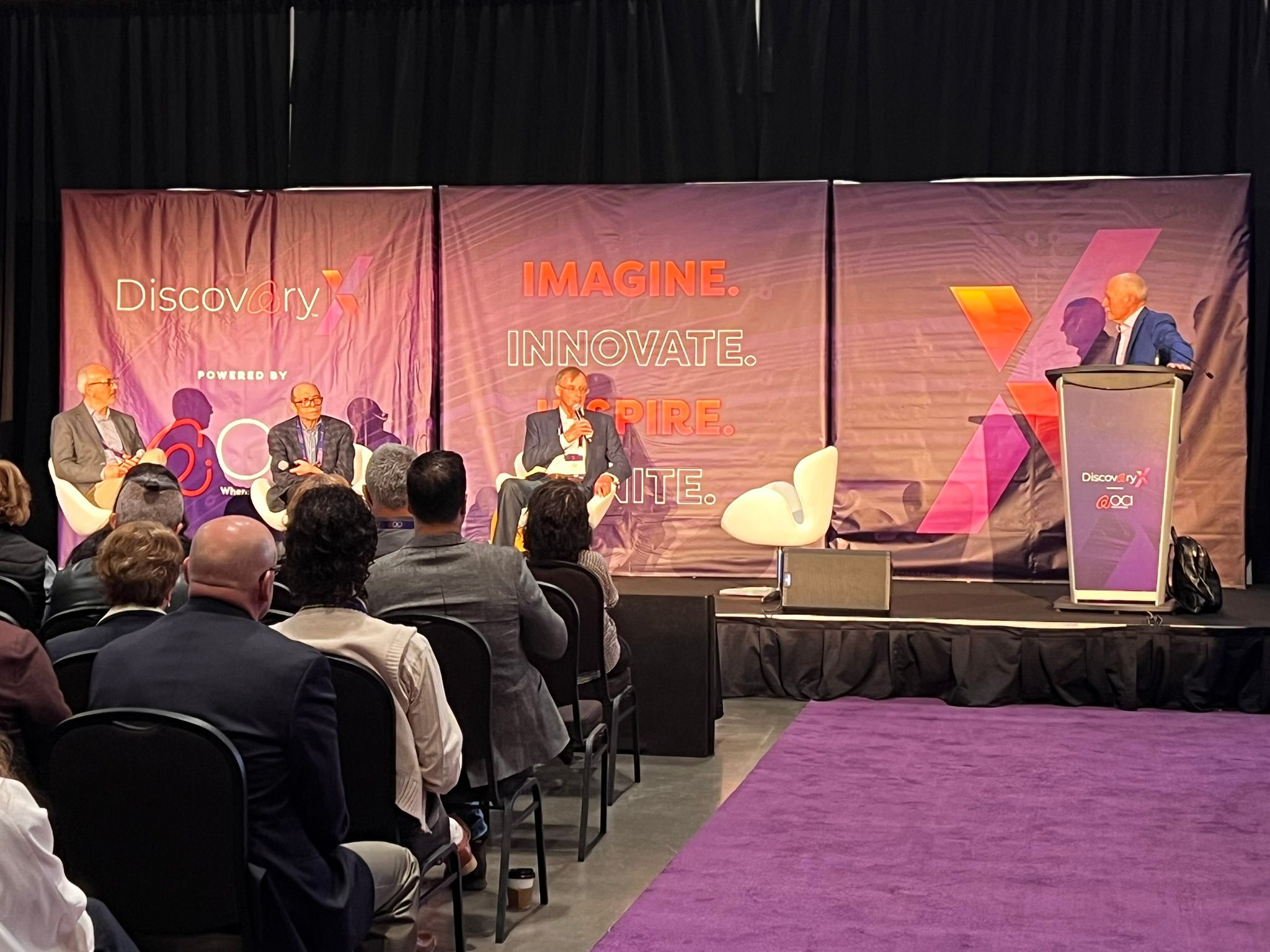
I’ve had the opportunity to listen to Dr. Geoffrey Hinton “Godfather of AI- Nobel Prize Laureate” which was one of the interesting parts of this event! I also really appreciated how people kept helping each other like, It was common to hear someone say, “You should talk to this person, I think they can help you with this,” and that kind of support is hard to find. Instead of feeling like everyone was only there for themselves, DiscoveryX felt like a place where people actually wanted to make introductions, open doors, and help others move forward. That spirit made a huge difference.
The Ontario Centre of Innovation introduced me to this exhibition, and I’m genuinely glad they did. Thanks to the OCI, who recommended me to attend this event. I really enjoyed being there, talking to people, building meaningful connections, finding ways to expand my business, and learning from the experience of founders, investors, and especially women founders who had already walked parts of this path.
By the end of the two days, I left with more than contacts. I left with perspective, ideas, follow-ups, notes, inspiration, and a clearer understanding of how others see growth, innovation, and opportunity. DiscoveryX gave me access not only to companies and investors, but to conversations that can actually move something forward.
And honestly, that’s what made it worth it.